
People spend years on their face and stop at the jawline. Then at some point a photograph shows a smooth face above a neck and chest that look a decade older — and that gap is almost entirely a matter of where sunscreen was applied and where it was not.

Why these areas age faster
- Thinner skin with fewer oil glands. The neck and chest have noticeably less of both than the face, so they dry out and crease sooner.
- Constant movement. The neck bends all day; the chest creases every night you sleep on your side.
- Years of sun with no protection. This is the main one. Decades of applying sunscreen to the face and nothing below it produce exactly the line you see.
- Hands get washed constantly and sit on a steering wheel in direct light, which is why they often show more sun damage than the face.
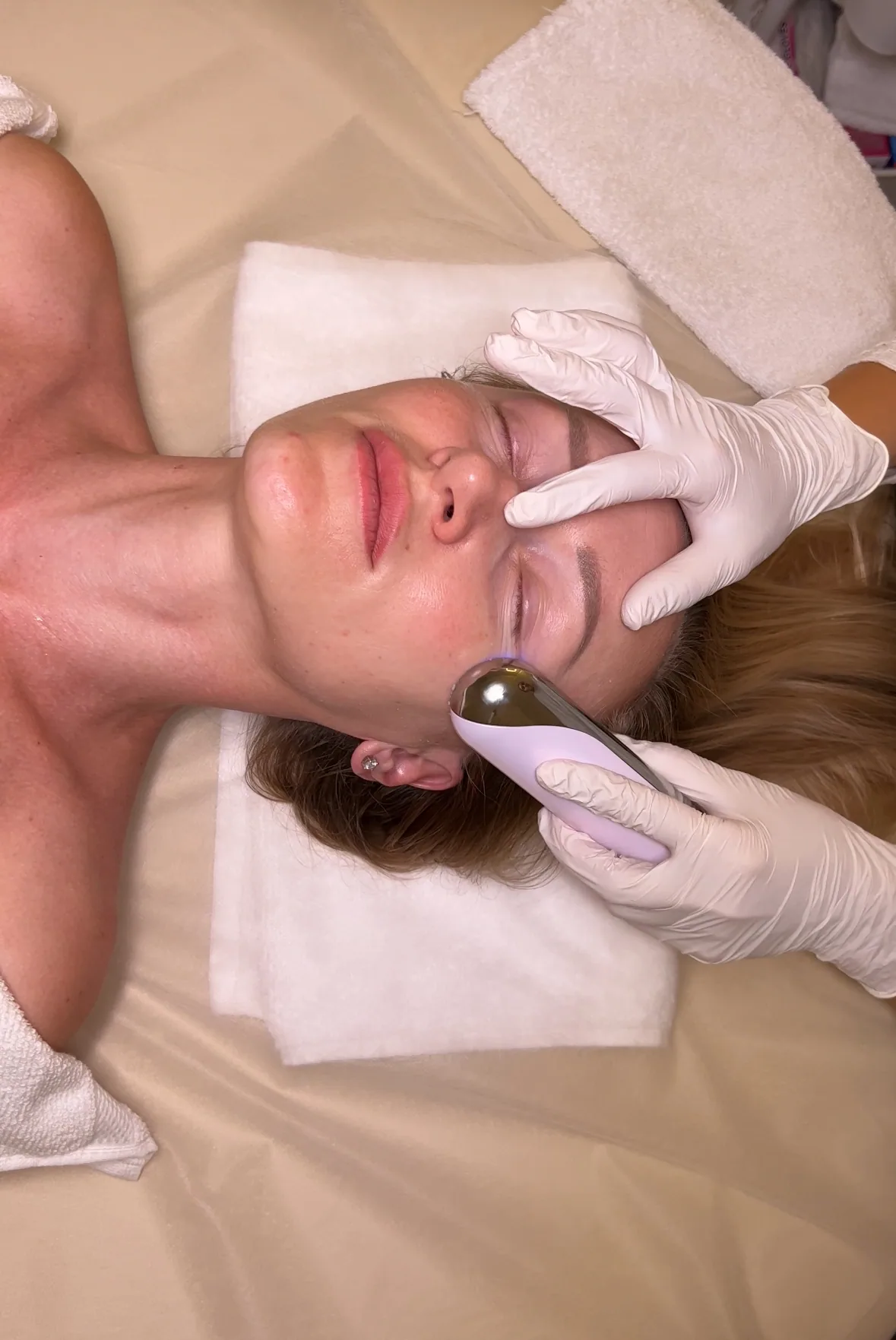
The neck and chest
- Extend whatever you already use downwards. There is no need for a separate neck product — your face moisturiser and your serum work here. Apply upwards, from collarbone to jaw.
- Sunscreen every day, to the neck, the sides of the neck, the back of the neck and the V of the chest. This single change does more than everything else combined.
- A retinoid, but carefully. This skin irritates far more easily than the face — start once a week, buffered over moisturiser, and build slowly. Most retinoid “reactions” on the neck are simply too much too fast.
- Vitamin C for the mottled brown patches that appear on the chest.
Honest expectations: texture, tone and pigment improve. Crepiness improves somewhat. Loose skin under the chin does not — that is structural, and nothing applied to the surface reaches it.

Hands
Two problems at once: dryness from washing and pigment from light. The dryness is easy — a cream kept by the sink, applied after every wash, with something richer overnight.
The pigment is a prevention problem. Sun spots on the backs of hands accumulate and do not fade on their own. Sunscreen on the hands every morning, reapplied after washing, is tedious and is the only thing that stops them arriving. A retinoid and vitamin C help the ones already there, slowly.
The easiest version of all this
Do not build a second routine. When you apply something to your face, keep going past the jaw and down the neck; when you have sunscreen left on your hands, that is where it goes. Nothing needs buying — the products that work on your face are the products that work here, and the only thing that actually changes is where you stop.