
A mark is a colour. A scar is a shape. That one distinction decides whether your problem fades on its own over months, or whether no cream will ever touch it — and it is the thing people most often get wrong when they spend a year on serums for something that needed a procedure.
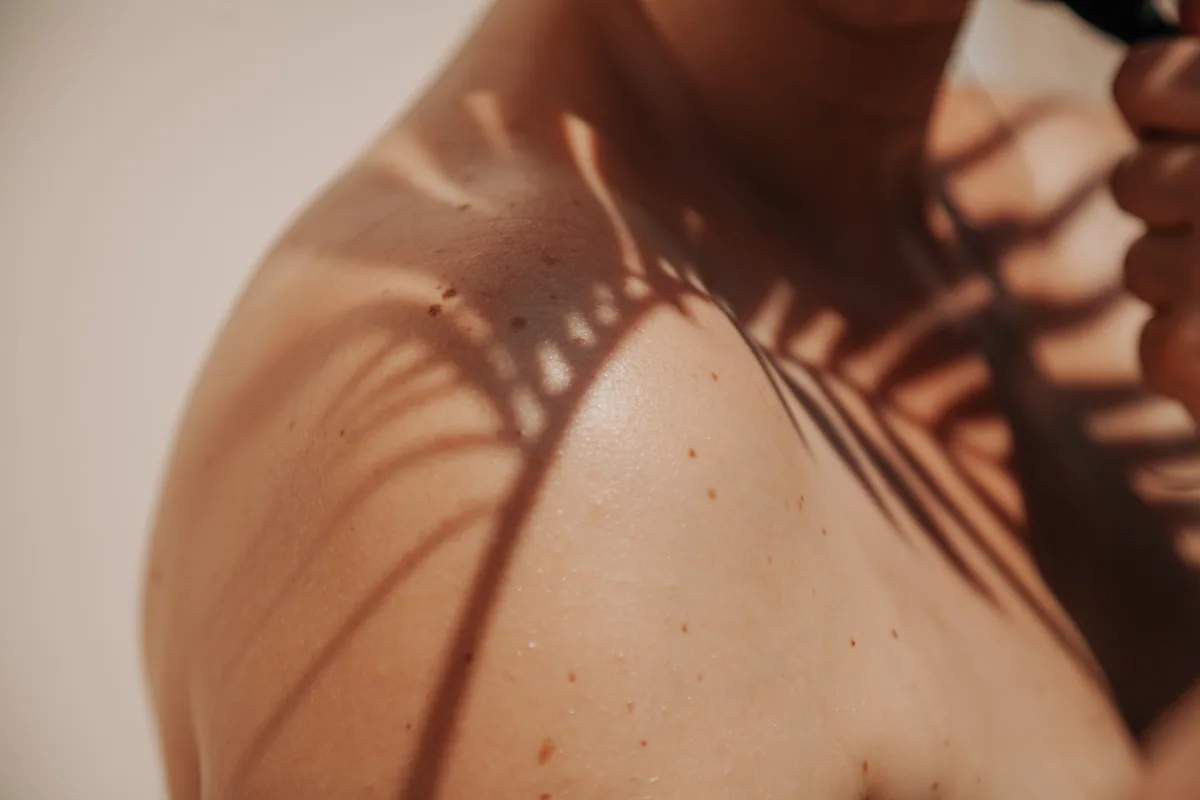
The test takes ten seconds
Stand side-on to a window so the light rakes across your face rather than hitting it straight.
- It disappears in raking light but you can see it straight on — that is a mark. Pigment or vessels sitting flat in otherwise normal skin.
- It appears in raking light as a dent or shadow — that is a scar. The skin’s structure is missing.

Many people have both at once on the same cheek, which is why progress feels stalled: the colour improves, the texture does not, and it reads as nothing working.
Marks: brown or red
Brown is pigment left behind after inflammation. It fades on its own — a few months on fair skin, considerably longer on deeper skin tones. Vitamin C, niacinamide, azelaic acid and a retinoid speed it up. Sunscreen is what decides whether it fades at all, because every unprotected day refreshes it.
Red or pink is not pigment at all — it is dilated vessels where the inflammation was. Pigment products do nothing for it. It fades with time, and the thing that genuinely helps is calming inflammation: azelaic acid, niacinamide, and not picking. Vascular laser is the option if it has sat there for years.

Scars: what creams cannot do
Atrophic scars are tissue that was destroyed and healed short. Ice-pick are narrow and deep, boxcar have sharp edges, rolling are broad and wavy. None of them is reachable by anything you apply at home.
A retinoid used consistently over a year improves the surrounding texture enough that scars catch less shadow, which reads as mild improvement. That is the honest ceiling for skincare here. Real change comes from microneedling, resurfacing lasers, subcision or fillers, chosen according to the scar shape — which is a conversation with a dermatologist, not a shopping decision.
What prevents both
- Treat the acne, not the aftermath. Every spot prevented is a mark that never has to fade.
- Do not pick. This is not advice about discipline — squeezing pushes inflammation deeper, and depth is exactly what turns a mark into a scar.
- Sunscreen daily, including on the marks you are trying to fade.
- Get deep, painful cysts seen early. Those are the ones that scar, and they are the ones where waiting costs the most.
If you are not sure which you have after the window test, that is the moment to have someone look properly rather than to buy another serum. Spending a year treating a scar as though it were a stain is the single most common waste I see.