
The eye area is where the most money is spent for the least return. Most eye creams are a lighter moisturiser in a smaller jar at triple the price — and the things people actually want fixed there are often not creamable at all.

Why this skin is different
It is considerably thinner than the rest of the face, has very few oil glands, and moves roughly ten thousand times a day. That combination means it dehydrates first, shows fine lines first, and reacts to things the rest of your face shrugs off.

Name the problem before buying
- Fine lines from dryness — these respond well. A humectant plus a lipid, consistently, and they soften within weeks.
- Expression lines — the ones there when your face is still. Creams improve the texture around them, not the line itself.
- Brown darkness — pigment. Responds to vitamin C, niacinamide and a gentle retinoid, slowly.
- Blue or purple darkness — vessels showing through thin skin. Caffeine helps briefly in the morning; nothing in a jar changes it properly. Often inherited.
- A shadow, not a colour — that is the hollow under the eye casting a shade. It is anatomy. No cream reaches it, and claiming otherwise is where most of the marketing lives.
- Puffiness — fluid. Sleep, salt and position overnight matter far more than any product.
Pull the skin gently sideways in good light. If the darkness lightens, it is pigment. If it stays, it is vessels or shadow — and the answer is not on a shelf.

What is worth using
- Your face moisturiser, if it is fragrance-free and does not sting. For most people this is genuinely enough.
- Peptides or a low-strength retinoid if lines are the concern — a retinoid formulated for the eye area, two nights a week to start.
- Sunscreen, which matters here more than anywhere and gets applied here least. A mineral stick is the easiest way around stinging.
How to apply it
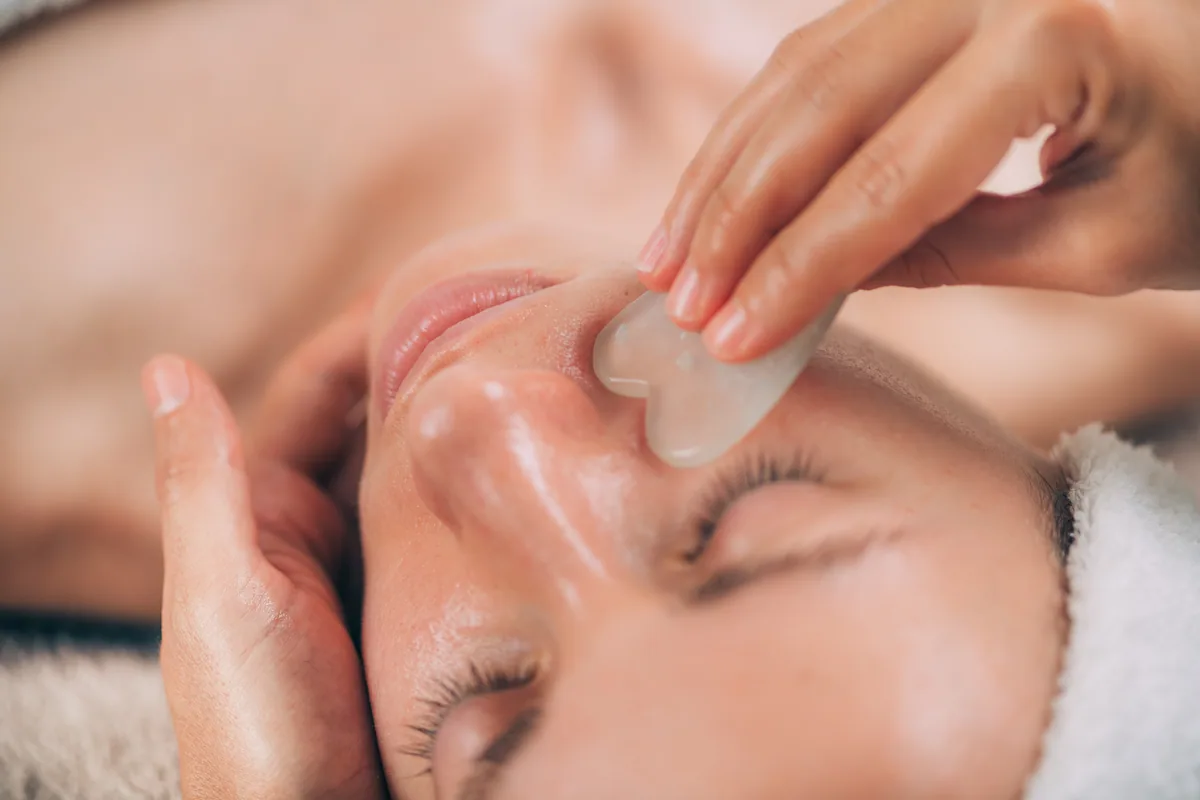
A grain of rice for both eyes. Ring finger, which presses lightest. Tap, never drag. Stay on the orbital bone rather than close to the lash line — product migrates upward overnight, and placing it too close is the usual cause of morning puffiness that people blame on the formula.
And give it three months before judging. This is the slowest-responding skin on the face, which is also why it is the easiest place to be sold something that was never going to work.