
Rosacea-prone skin does not need stronger products. It needs fewer of them. Almost everyone who comes to me with persistent facial redness has been treating it like acne for months — and that is exactly what keeps it going.

How it differs from ordinary redness
- Redness sits in the centre of the face — cheeks, nose, chin, between the brows — and stays there.
- It flushes in response to triggers, then takes longer and longer to settle.
- Small visible vessels appear over time.
- Bumps may appear, but there are no blackheads — that is the detail that separates it from acne.
- The skin stings from products that never bothered it before.
Rosacea is a medical diagnosis and only a doctor can make it. What follows is how to care for skin that behaves this way — not a substitute for seeing one.
Find your triggers before changing products
Triggers matter more than any serum. The usual ones: heat, hot drinks, alcohol (red wine especially), spicy food, sudden temperature changes, stress, intense exercise and sun.
Keep a two-week note of when your face flushes and what preceded it. Most people find two or three triggers that account for almost everything, and removing those does more than any product.

A routine that calms rather than fights
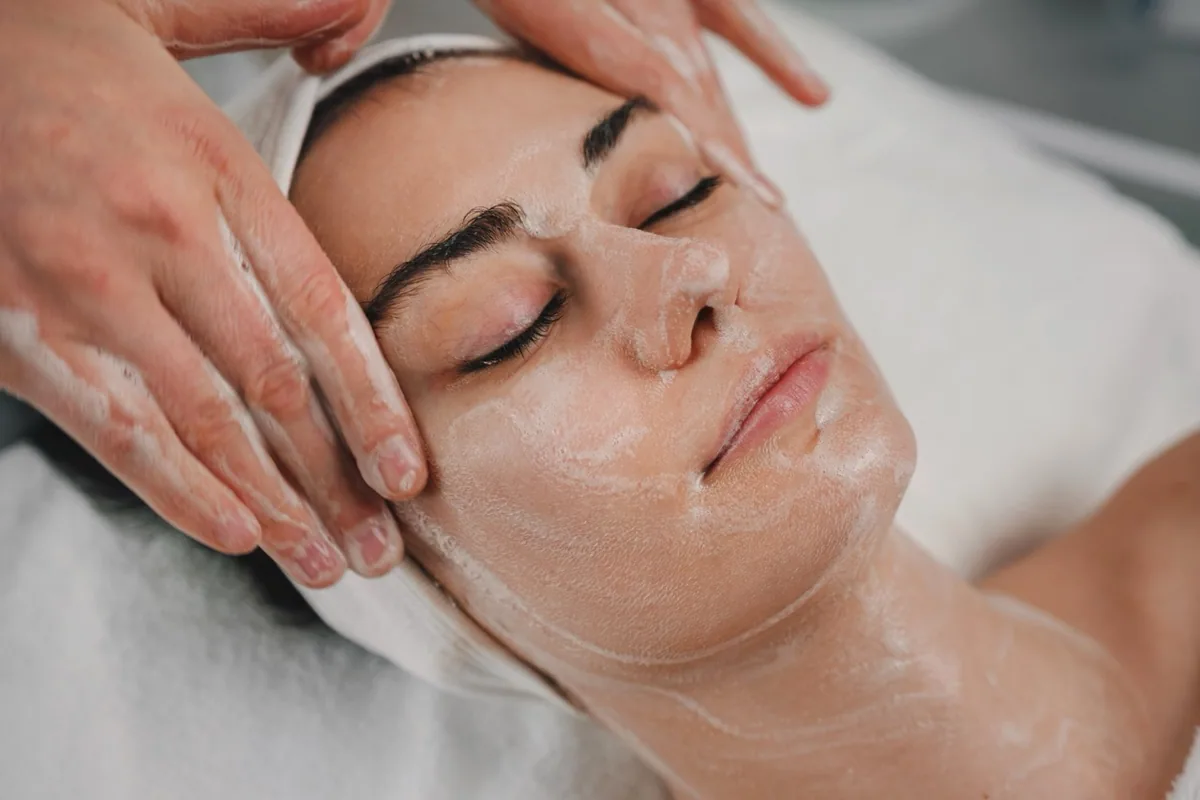
- Lukewarm water, never hot. A cream or milk cleanser, applied with fingers, rinsed gently. No cloths, no brushes.
- Azelaic acid — the most useful ingredient here. It reduces redness and bumps and is usually well tolerated.
- Niacinamide at a modest strength to support the barrier.
- A simple moisturiser with ceramides. No fragrance, no essential oils, no menthol or camphor.
- Mineral sunscreen every day. Zinc oxide sits on the surface instead of converting light to heat, which is why it suits reactive skin better.
What to stop immediately
Scrubs, cleansing brushes, alcohol toners, strong acids, retinol at full strength, hot steam, and “purifying” masks. Also anything described as refreshing or tingling — that tingle is irritation, and irritation is the engine of this condition.
When to see a doctor
Go sooner rather than later. Prescription treatment works far better than anything available on a shelf, and early treatment prevents visible vessels from becoming permanent. Go urgently if your eyes are dry, gritty or red — rosacea affects eyes in a large share of cases and that needs medical attention.